Every community water system in the United States is required to deliver an annual water quality report, formally called a consumer confidence report (CCR), to its customers. These reports are one of the most direct lines of communication between a utility and the people it serves, yet they often get filed away unread. This guide breaks down what water quality reports contain, why they matter, and how cities and utilities can turn them into clear, effective public health tools.
Key Takeaways
Every U.S. community water system must send customers an annual Consumer Confidence Report on drinking water quality by July 1, summarizing the previous calendar year’s data. These reports explain where drinking water comes from, what contaminants were detected (if any), and whether the water meets state and federal standards for safe, clean water.
- Water quality reports are required under the Safe Drinking Water Act and serve as a core public health communication tool, not just a compliance checkbox.
- CCRs must include detected contaminants, their concentrations, health effects language, source water details, and contact information for customers with questions.
- Vulnerable populations, including infants, pregnant people, and immunocompromised individuals, depend on clear report language to make informed decisions about their tap water.
- Starting in 2027, systems serving 10,000 or more people must deliver reports twice per year under revised EPA consumer confidence report rules.
- Goldstreet Designs specializes in helping cities and utilities transform technical CCR data into clear, engaging, accessible reports.
What Is a Consumer Confidence Report (Water Quality Report)?
A water quality report, formally called a Consumer Confidence Report (CCR), is an annual drinking water quality summary that every community water system in the U.S. must provide to its customers. It covers the tap water delivered through the public water distribution system.
- CCRs focus on water supplied by public systems. They do not cover bottled water or private wells, which fall outside federal CCR obligations.
- The requirement was added to the Safe Drinking Water Act in 1996. The first reports were mailed in 1999, covering calendar year 1998 data. Reports now cover water quality for the previous calendar year (e.g., a 2026 report covers 2025 data).
- The core purpose is straightforward: tell customers whether their drinking water meets or exceeds EPA and state health standards, and explain any issues in plain language.
- Some systems already go beyond the minimum. Honolulu’s Board of Water Supply, for instance, sends semiannual reports in July and December, while federal rules still require at least one report per year.
Why Water Quality Reports Matter for Public Health and Trust
CCRs are a frontline tool for public health protection, especially for vulnerable groups such as infants, pregnant people, and those with weakened immune systems. Health effects language in reports explains risks if contaminants exceed acceptable levels, giving people the information they need to act.
- Reports translate technical monitoring results, like maximum contaminant levels and action levels, into information people can actually use, such as whether to install a home filter or consult a doctor.
- Clear water quality information builds or rebuilds community trust. Past U.S. contamination crises, including lead exposure in Flint, Michigan, and PFAS concerns nationwide, showed what happens when transparency falls short.
- Accessible, well-designed reports help residents understand issues like lead contamination from household plumbing, PFAS “forever chemicals,” arsenic, nitrates, TTHMs, and radium, and know where to get additional information.
- For utilities and cities, a strong quality report is both a legal requirement and a communications asset that can reduce call volume, minimize misinformation, and lower crisis risk, especially when paired with high-quality public utility outreach.
Who Must Provide a Water Quality Report, and Who Doesn’t?
CCRs are mandatory for all community water systems in the United States: systems that serve the same population year-round, typically defined as at least 25 year-round residents or 15 service connections in use year round.
- Community Water System (CWS): Supplies water to residents year round. Must send CCRs. This is the system type the federal government regulates under the CCR rule.
- Non-Transient Non-Community Water System (NTNCWS): Serves a stable population (e.g., schools, factories) but not residential. May have state-level reporting obligations, but federal CCR rules focus on CWS customers.
- Transient Non-Community Water System (TNCWS): Serves a changing population (e.g., rest stops, campgrounds). Not required to send CCRs under federal law.
- CCR rules do not cover private wells serving individual homes. Well owners are responsible for arranging their own testing and water quality information.
- Community water systems are required to monitor specific contaminants based on federal regulations. Customers can usually identify their water system name on a utility bill, a city website, or a ZIP-code-based search tool provided by state agencies.
What Information a Drinking Water Quality Report Must Include
EPA regulations under 40 CFR Part 141, Subpart O outline specific content every CCR must include, ensuring consistent drinking water quality information nationwide.
- Identifying information about the water system and contact information for the local water utility for questions
- A description of water sources, surface water (rivers, lakes, reservoirs) or groundwater (wells, aquifers), and a statement on the overall quality of the tap water supply
- Water quality reports must include information on detected contaminants and health effects, their measured levels, maximum contaminant levels or treatment techniques, and whether the system met standards, along with the likely source of each substance
- Mandatory health language, including warnings for people with compromised immune systems, information about lead in drinking water and household plumbing, and explanations of any violations and corrective actions
- Water quality reports indicate compliance status with drinking water regulations. Many states require additional content (California, for example, mandates extra reporting to the Division of Drinking Water), so staff should always consult their state primacy agency guidance when preparing the report.
- Educational information in reports may include tips on lead protection and source water prevention measures.
How to Read a Water Quality Report: Terms, Tables, and Acronyms
CCRs often include tables packed with abbreviations and technical metrics. Here is how to decode them.
Contaminant tables are usually organized with rows for each detected contaminant and columns for:
- Units: Drinking water contaminants are reported in units like parts per million or parts per billion
- Highest Level Detected: The peak concentration found during monitoring
- Range: Low to high values across all sampling points
- MCL: Maximum Contaminant Level, the highest level of a contaminant allowed in drinking water
- MCLG: The level below which there is no known health risk
- Violation: Whether the system exceeded legal standards
- Typical Source: Where the substance likely comes from
Other common acronyms include MRDL (Maximum Residual Disinfectant Level), TT (Treatment Technique), AL (Action Level, used for lead and copper), and ND (non-detect). Entries like “0 violations” or “no exceedances” mean the system passed. The “90th percentile” is used for lead and copper rule reporting: if 90% of tap samples fall at or below the action level, the system has not exceeded it.
The presence of contaminants in water does not necessarily indicate an immediate health risk. Even when contaminants are present at low levels, water can still meet all legal standards, and utilities are required to clearly explain any health significance.
Common Contaminants and What They Mean for Drinking Water Quality
CCRs highlight both contaminants that occur naturally and those introduced by human activity. Understanding the most frequently discussed ones makes the report less intimidating.
- PFAS (“forever chemicals”): Long-term cancer and immune effects. EPA estimates that roughly 15 to 20 percent of systems tested under UCMR 5 exceed the federal limits for PFOA or PFOS. CCRs are a key way to educate communities about per- and polyfluoroalkyl substances and their risks.
- Lead: Neurological harm to children; there is no safe level. Lead and copper contamination often comes from household plumbing and service lines, not the water source itself. Lead testing is performed on samples taken at the tap.
- Arsenic: Cancer risk; naturally occurring in certain geology.
- Nitrate: Infant “blue baby” syndrome (methemoglobinemia).
- TTHMs (total trihalomethanes): Disinfection byproducts with cancer links, formed when chlorine reacts with organic materials. Chlorine is continuously added to water to prevent bacterial growth throughout the water treatment and distribution system.
- Radium: Radioactive, bone cancer risk.
Not every contaminant in a CCR exceeds a health-based standard. The report should clearly flag which, if any, are above MCLs or action levels, and whether the drinking water meets legal requirements.
The EPA monitors up to 30 unregulated contaminants for health risks under the Unregulated Contaminant Monitoring Rule. UCMR-4 tested 30 unregulated contaminants from 2018 to 2020, and UCMR-5 sampling ran from 2023 through 2025 at systems serving 3,300 people or more, with final results released in 2026.
People also frequently ask about water hardness, taste, and odor. Hard water and soft water characteristics are not regulated federally and may or may not appear in the report, depending on local policy. Sodium levels and corrosion-related factors like copper may also be addressed depending on the system.
Where Your Drinking Water Comes From: Sources and Watersheds
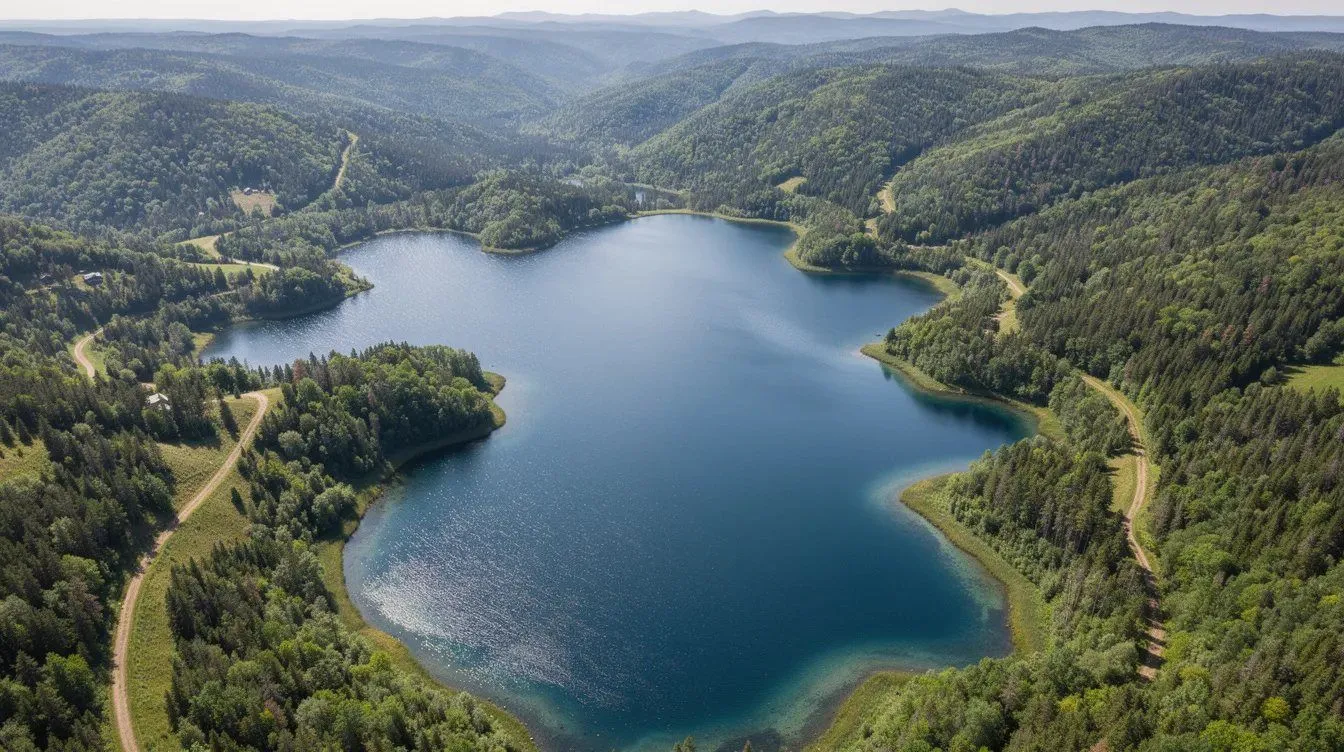
Water quality reports always identify drinking water sources, whether surface water like rivers, lakes, and reservoirs, or groundwater from wells and aquifers, and often include maps of watershed or source water protection areas.
- Large systems often blend water from multiple sources. New York City has the largest unfiltered water supply in the U.S., drawing from the Catskill/Delaware watershed. Systems like those along the Colorado River manage complex, multi-source supplies of water from vast distances.
- Land use in a watershed (agriculture, industry, urban runoff) can introduce microbiological contaminants, nitrates, pesticides, volatile organic compounds, and radionuclides into water sources and groundwater.
- The Safe Drinking Water Act requires source water assessments, which evaluate vulnerabilities to contamination. These are often summarized or linked in CCRs.
- Oʻahu tests drinking water for 91 chemical contaminants, and BWS conducts about 30,000 water tests annually, an example of robust monitoring that goes well beyond federal minimums.
- Check your CCR or local utility website for maps and detailed source water information if you want to see exactly where your tap water originates.
How and When Water Quality Reports Are Delivered
Local water suppliers must provide water quality reports to customers annually by July 1, summarizing the previous calendar year’s drinking water quality data.
- Common delivery methods include mailed paper copies, bill inserts, direct emails, a direct URL printed on the bill, or door hangers and postcards with a web link and phone number for requesting printed copies, all of which can leverage pre-designed educational materials for utilities.
- Some utilities now provide semiannual reports. Under revised EPA rules finalized in 2024, systems serving 10,000 or more people must deliver reports twice per year starting January 1, 2027.
- Accessibility best practices include providing large-print or translated versions, ADA-compliant web PDFs, screen-reader-friendly HTML, and phone numbers or a water quality hotline for requesting accommodations.
- Water quality data in reports may be up to one to two years old for certain stable contaminants. This is expected and allowed because concentrations of many substances usually do not change quickly. Monitoring schedules vary from monthly to annually depending on the contaminant.
How Residents Can Use Water Quality Information
CCRs are meant to be used, not filed away. Here are specific next steps after reading your report.
- Look first at whether your system had any violations or contaminants above standards, then read the utility’s explanation of what happened and what is being done. Your report will describe whether the risk is low risk or requires immediate action.
- Households with infants, young children, pregnant people, or immunocompromised members should pay special attention to lead, nitrate, microbial indicators, and any health advisories for disease control noted in the report.
- Customers in older homes with possible lead service lines should request tap water testing. Follow CDC and Environmental Protection Agency recommendations if lead is a concern, even if the system-level CCR shows safe drinking water.
- To get more information: call the utility number listed in the report, attend local water board meetings, use EPA or state search tools, or contact certified labs for private well testing. Many reports also link to additional information online.
Best Practices: Making CCRs Clear, Visual, and Actionable
This section is for municipal and utility staff focused on communication and design. Effective CCRs go beyond minimum compliance: they serve as an important part of community outreach, and understanding why some outreach fails to engage customers can help you design reports people actually read.
- Start with plain-language summaries that explain whether drinking water supplies met standards, what changed since last year, and any major projects affecting water quality or water supply.
- Use readable design: logical section headings, clear contaminant tables, infographics or icons for key messages, and high-contrast, ADA-friendly color choices suitable for both print and web. Life is too short for unreadable reports.
- Prioritize multilingual access in communities where English is not the primary language. Translated summaries, QR codes linking to other formats, and culturally relevant imagery help reach every customer, and ongoing insights from a local government and utility outreach blog can support these efforts.
- For examples, templates, and hands-on support turning technical drinking water data into community-ready reports, visit Goldstreet Designs’ CCR design services.

Glossary of Water Quality and Report Terms
This glossary covers the most important CCR-related terms for non-technical readers. Terminology can vary slightly by state, so always refer to the specific definitions in your utility’s report when in doubt.
- Consumer Confidence Report (CCR): The annual report a public water system sends to customers summarizing drinking water quality and compliance.
- Public Water System (PWS): Any system that provides water to the public, including community and non-community systems.
- Community Water System (CWS): A public water system that supplies water to the same population year-round.
- Non-Transient Non-Community Water System (NTNCWS): A system serving a stable, non-residential population, like a school or office building.
- Maximum Contaminant Level (MCL): The highest level of a contaminant legally allowed in drinking water.
- Maximum Contaminant Level Goal (MCLG): The level of a contaminant below which there is no known health risk. MCLGs are not enforceable.
- Action Level (AL): The concentration of lead or copper that triggers additional requirements under the lead and copper rule.
- Treatment Technique (TT): A required process intended to reduce the level of a contaminant when no MCL is practical.
- 90th Percentile: The value below which 90% of tap samples fall; used in lead and copper rule compliance.
- Water Hardness: A measure of dissolved minerals (mainly calcium and magnesium) in water. Hard water affects appliances and taste but is not a federal health standard.
- Distribution System: The network of pipes, storage tanks, and service lines that delivers finished water from the treatment plant to your tap.
- Source Water: Untreated water from rivers, lakes, reservoirs, or aquifers before it enters the water treatment process.
- PFAS: Per- and polyfluoroalkyl substances, often called “forever chemicals,” which are a growing concern in drinking water supplies nationwide.
Frequently Asked Questions about Water Quality Reports (CCRs)
These FAQs address common questions not fully covered elsewhere in this guide.
How can I get a copy of my local water quality report?
Every community water system must make its CCR available by July 1 each year, usually by mailing it, posting it online, and providing a phone number for printed requests. Check your latest water bill, visit your city or utility website, or search your state drinking water agency’s site by ZIP code or system name. If you still cannot find it, call your water provider directly and request a mailed or emailed copy at no cost.
What should I do if my report shows a violation?
The CCR must describe what happened, whether there is an immediate health concern, who is most at risk, and what corrective actions are underway. Follow any guidance in the report, such as boiling water or using an alternate source, contact your utility for clarification, and consult your healthcare provider if high-risk individuals are in the home. Serious, acute problems are typically communicated through separate public notices in addition to the annual report.
If my CCR looks fine, do I still need to test my tap water?
CCRs describe water quality at the system level, not at each household tap. Home plumbing, especially older lead pipes and fixtures, can affect what comes out of your faucet. Residents in older homes or those with specific health concerns should consider having their water tested by a certified lab, especially for lead. Private well owners are not covered by consumer confidence reports and should follow EPA guidance for regular well testing.
Why doesn’t my report list water hardness, taste, or odor issues?
Federal law does not require reporting of water hardness, taste, or odor because they are not primary health-based standards, though some utilities include them voluntarily. Contact your utility’s water quality team if you want hardness numbers for appliances or have questions about taste and odor not addressed in the CCR.
How do CCRs compare with online tap water safety tools?
Advocacy groups and data portals often republish EPA and state monitoring results, providing useful search tools by ZIP code. However, the official CCR from your utility is the primary, regulated communication under federal standards. Use third-party tools as a supplement, not a replacement, and verify any concerns directly with your water provider and state drinking water agency.